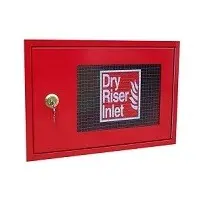
Landon Kingsway Dry Riser Inlet Horizontal Architrave and Door
BS5041-compliant inlet housing for dry riser systems
- Dry riser inlet horizontal architrave and door finish: Red RAL3002
- Standard cabinet dimensions: 395mm (H) x 595mm (W) x 100mm (D)
- Material: 16swg Zintec steel
- Architrave: 30mm wide on all sides for a clean installation
- Glass panel with “PRV” lettering for quick identification
- Secure design: Slam lock with key and stainless steel piano hinge
- Fully compliant to BS5041: Part 4
Product Information
The Dry Riser Inlet Horizontal Architrave and Door unit (Part No. 10905501) is designed to house the dry riser inlet breaching valve, a vital connection point used by fire and rescue teams to charge a building’s dry riser system. These valves enable water delivery to fire fighting outlets located on each floor, making them an essential component of high-rise and commercial fire safety plans.
This dry riser inlet horizontal architrave and door features a low-profile horizontal layout with a clean 30mm architrave, allowing for a seamless fit within internal wall spaces. Manufactured in durable 16SWG Zintec steel and finished in red RAL3002, the dry riser inlet horizontal architrave and door is both robust and easily identifiable during an emergency.
Installed typically at ground or entrance level, this dry riser cabinet is trusted by professionals in fire safety, facilities management, and architectural design for its reliable performance and BS-compliant construction.
Q1: What’s the main benefit of the horizontal architrave format?
It provides a neat, recessed solution in spaces with limited vertical wall area.
Q2: Is this unit lockable for security?
Yes. The dry riser inlet horizontal architrave and door features a slam lock with a key for secure, fast emergency access.
Q3: Where is this commonly installed?
Usually on the ground floor, recessed into internal walls, especially in commercial and high-rise residential buildings.
Get in touch
Have a question? Our team can help.